Bedding Materials
Wool Comforters Decoded: Fill, Loft, and Seasonal Warmth
A comforter’s warmth is not a simple consequence of its fiber. With wool, the amount of fill, the way it is held in place, and the room in which it is used all help determine whether the bed feels airy, substantial, or unexpectedly warm.
Published October 16, 2026
There is a particular pleasure in getting into bed on a cold night and finding the temperature already negotiated. The room may be cool; the comforter, without feeling heavy, may hold a pocket of warmth around the sleeper. Wool is often discussed in this context as though the fiber itself had settled the matter. It has not. A wool comforter is a construction, not a single sensation. Its fill weight, loft, quilting, cover, and care history work together, and the same word on two labels can describe bedding that behaves quite differently.
That distinction is useful because shopping language tends to compress several questions into one. Is it warm? Is it lofty? Is it appropriate for summer? The answers depend not only on the material but also on the sleeper and the room: their preferred temperature, the bedding layered underneath, humidity, ventilation, and the ordinary fluctuations of a home through the seasons. Understanding wool fill is less a matter of looking for a universal warmth ranking than of learning what the specifications can—and cannot—tell you.
What wool fill does in a comforter
Wool fibers have a naturally crimped structure. In a loose mass, that structure can help create spaces that hold still air; still air, rather than the mere presence of a particular fiber name, is an important part of insulation. A comforter’s fill forms a layer around the body, while its outer shell and stitching help keep that layer where it belongs. The outcome is a blend of material behavior and design.
Wool is also hygroscopic: it can take up some water vapor from its surroundings without immediately feeling wet. That property is often discussed as one reason wool bedding may feel comfortable across changing conditions. But it is not a promise that every wool comforter will keep every sleeper dry, nor does it replace ventilation or temperature control. A sleeper who runs warm under a thick comforter may still feel too warm, whatever the fiber. In bedding, general material properties are a starting point, not a personal guarantee.
It is worth distinguishing wool fill from a wool cover. A comforter may contain wool inside a cotton shell, for example, or use wool in a blend. The cover affects the first contact with the skin, the fabric’s breathability, and how the comforter drapes. The filling affects much of its loft and insulation. When a product description simply says “wool,” the useful follow-up questions are: wool where, in what form, and in what quantity?
Fill weight: the number that needs context
Fill weight is the mass of filling in a comforter, usually stated for an individual size or as a specification for a particular construction. In general, more fill can mean a fuller, more insulating layer. But that relationship is not an exact conversion from ounces to warmth. The dimensions of the comforter, the distribution of the wool, the fiber preparation, and the stitching all influence what a given quantity feels like in use.
Comparisons are most meaningful when the products are similar in size and construction. A fill-weight figure for a queen comforter cannot be fairly compared with a figure for a king unless the measurement is clearly normalized. Even then, two comforters with comparable weight may differ in loft, drape, and how evenly they cover the body. Specifications are best read together rather than treated as a leaderboard.
If a maker provides fill weight, consider it a clue about the comforter’s intended character. A lighter fill may suit someone who wants a less substantial layer or lives in a mild climate. A heavier fill may be more appropriate for a cool bedroom or for a sleeper who likes a notably enveloping bed. These are broad tendencies, not fixed categories. A warm sleeper in a well-heated room may prefer a lighter option even in winter; someone who sleeps cold may welcome more insulation in the same house.
When the label gives no fill weight, look for other concrete details: the comforter’s finished dimensions, whether the fill is distributed in sewn-through channels or separate compartments, and whether the maker describes it as lightweight, all-season, or winter-weight. Such labels are not standardized across every maker. They are most useful when accompanied by a specific measurement or a clear account of the construction.
Loft is not the same thing as warmth
Loft is the height and fullness of the filled layer. A lofty comforter often looks generous when it is spread across the bed and may feel buoyant around the body. But loft alone does not determine warmth. A comforter can appear lofty yet have a comparatively light fill; a denser one can sit closer to the bed. The fiber’s ability to hold air, the amount of material, and the way the fill is arranged all matter.
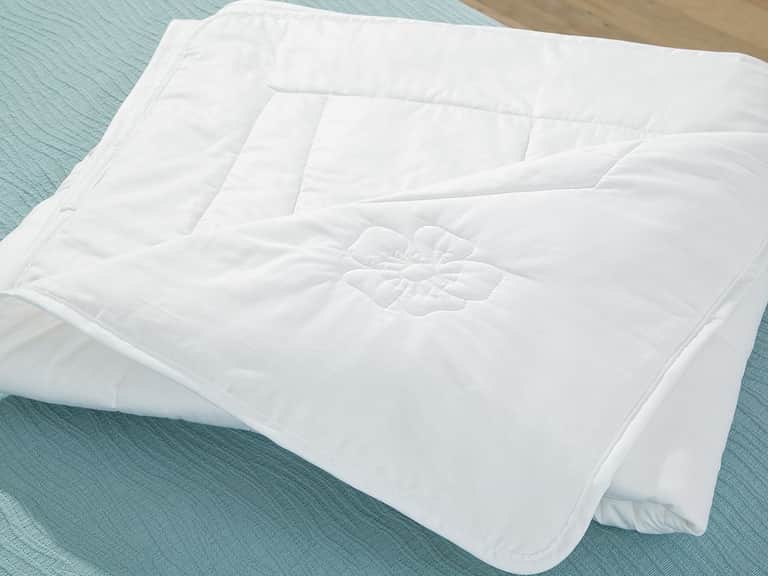
Construction can help explain what you feel. Stitching that runs through both sides of a comforter secures the filling, but it can also create narrow areas where the fill is compressed. Channel construction, with longer sewn lines, divides the comforter into lanes. Box or compartment construction creates separated spaces that can help limit movement of the fill, though the details vary by maker. None of these methods is automatically best. The question is whether the fill stays reasonably even and whether the design suits the way the comforter will be used.
Over time, handling and washing may alter a comforter’s appearance and feel. Fill can shift or settle; a comforter that was once evenly lofted may develop thinner patches if its construction or care makes redistribution difficult. Before buying, it can be helpful to find out whether the piece is designed for regular home laundering, requires professional cleaning, or has specific drying instructions. A product that feels appealing on the first night should also be practical enough to maintain.
Seasonal warmth is a household question
“All-season” sounds like a settled answer. In practice, it describes a range of possible uses, not a universal result. The same comforter can feel just right in one bedroom and too warm in another. Climate matters, but so do heating habits, the number of layers on the bed, mattress and sheet materials, and whether the sleeper tends to feel hot or cold at night.
For a warm room or a sleeper who prefers a light cover, a lower fill weight may be the more comfortable place to begin. In a cool bedroom, or for someone who routinely wakes chilly, a fuller fill could make sense. Where temperatures swing substantially between seasons, some people prefer a medium-weight comforter with blankets added or removed as needed. Others find separate lighter and heavier bedding easier to manage. There is no prize for making one cover answer every meteorological problem.
Wool’s reputation for regulating temperature can be helpful when comparing materials, but it should not be mistaken for active climate control. A comforter does not sense that the room has warmed and turn itself down. It provides insulation, and the sleeper’s body, the room, and the layers around it determine the resulting comfort. If overheating is a recurring problem, changing the fill weight or removing a layer may matter more than changing to a fiber with a particular reputation.
A simple way to think through seasonal use is to begin with the room rather than the calendar. Is the bedroom consistently cool, or does it warm up at night? Does the window remain open? Is the bed already layered with a duvet cover, blanket, or quilt? The answers help make product descriptions more legible. “Medium warmth” becomes more useful when you know what it is being asked to do.
A practical guide to evaluating specifications
Comforter descriptions can be read like a small technical document. The following details are particularly useful when they are provided:
- Fill composition: Confirm whether the fill is entirely wool or a blend, and whether the description identifies the type of wool or its processing.
- Fill weight: Check whether the number applies to your chosen size. Treat it as one comparison point, not a complete prediction of warmth.
- Construction: Look for information about quilting, channels, or compartments, which can indicate how the fill is distributed and secured.
- Cover fabric: Note the shell material and weave. It affects feel, drape, and the way the filling is contained.
- Finished dimensions: Confirm that the comforter will provide the coverage you expect on your mattress and bed frame.
- Care instructions: Find out whether the comforter can be washed at home, needs a particular drying method, or calls for professional care.
- Certification and sourcing: If animal welfare, organic standards, or regional sourcing matter to you, look for specific, verifiable information rather than broad adjectives.
If a description leaves out important specifications, asking the maker or retailer can be more revealing than relying on promotional phrases. Useful questions include whether fill weight varies by size, how the fill is held in place, and what cleaning method is recommended. A clear answer does not guarantee that a comforter will suit every sleeper, but it gives you a firmer basis for comparison.
Care: preserve the structure, not just the surface
Care instructions deserve attention before a comforter is brought home. Wool products can have specific cleaning requirements, and the right method depends on the fabric, construction, and any finishes used. Some bedding is designed for professional cleaning; other products may permit careful home laundering. The care label is more authoritative than a general rule about wool.
In broad terms, avoid assuming that a large comforter belongs in an ordinary washing machine. A machine that is too small may compress the comforter or prevent it from rinsing properly. Heat, agitation, or an unsuitable detergent may affect wool fibers and the shell. Likewise, drying instructions matter: a damp, bulky comforter can take time to dry thoroughly, and incomplete drying may leave it uncomfortable or musty. Follow the maker’s directions rather than improvising from the care routine used for sheets.
Regular airing and prompt attention to spills may reduce how often deep cleaning is needed, though these steps do not substitute for the manufacturer’s recommendations. A duvet cover can also act as a removable outer layer, helping protect the comforter from routine soil. If the fill shifts, consult the care guide before trying to knead or aggressively shake it back into place. A gentle redistribution may be appropriate for some designs; others are better left undisturbed.
Storage has its own modest importance. A comforter should be clean and completely dry before it is put away. Keeping it in a breathable storage bag or other suitable container can help protect it from dust without trapping excess moisture. Avoiding long periods of compression may also help preserve the comforter’s loft. These are ordinary precautions, but bedding tends to reward them quietly, over years rather than nights.
Wool compared with other bedding materials
Comparing wool with cotton, down, or synthetic fill is useful only when the question is specific. Are you looking for a particular weight, ease of washing, drape, or source material? Wool may appeal to someone interested in natural fiber fill and a substantial yet potentially breathable layer. Cotton fill can feel different in weight and structure. Down is often associated with loft and lightness, while synthetic fills vary widely in their feel and care needs. None of these descriptions applies uniformly to every product.
It is also easy to confuse a comforter’s filling with its bed-facing surface. Sheets, duvet covers, blankets, and the comforter shell each contribute to the tactile experience. A wool-filled comforter inside a smooth cotton cover will not feel like uncovered wool against the skin. If the first-contact sensation matters, pay attention to the cover and any required duvet cover as well as to the fill itself.
Environmental claims call for similar care. “Natural” describes a broad material category, not a complete account of a product’s impacts. Farming, processing, dyeing, transport, durability, and end-of-life handling all belong to the larger picture. Certifications can provide useful information, but their meaning depends on the standard and its scope. For a responsible comparison, look for claims that specify what was certified and which stage or material the certification covers.
Choosing for the sleeper, not the label
The most useful question may be the least technical: what does a comfortable night feel like to you? Some people like the slight weight of a full, enveloping cover. Others prefer a low-profile layer they can barely feel. A person who sleeps warm may want a lighter fill, even if the climate is cool; someone who sleeps cold may favor greater insulation in a temperate room. Shared beds add another complication, since two sleepers can have different ideas about the ideal temperature.
If you are uncertain, take inventory of what already works. A comforter that is too hot may leave you kicking off the covers; one that is too light may prompt a nightly search for another blanket. Notice whether the problem occurs year-round or only during a particular season. That small observation can guide a choice more reliably than a generic promise of “perfect comfort.”
It can also help to think in layers. A moderate comforter paired with a removable blanket offers flexibility, while a single heavy layer may be simpler in a consistently cold room. What is convenient depends on the household: how often the bed is made, how much storage is available, and whether the bedding will be shared. Seasonal comfort is partly a question of warmth and partly a question of daily habits.
The useful answer is usually a combination
Wool comforters are best understood through the details that surround the fiber name. Fill weight can suggest how much material is present; loft indicates how full the layer appears; construction helps explain how evenly the fill is held; and the shell influences touch and drape. Care requirements determine whether the comforter fits comfortably into the life of the household.
No single specification predicts the whole experience. A well-chosen comforter is one whose insulation suits the sleeper and the bedroom, whose construction supports its intended use, and whose maintenance is realistic. The label can narrow the field. The room, the person under the covers, and the small rituals of bedtime make the final determination.
That is why “warm” is an incomplete description. For some sleepers, comfort means a light cover that does not trap too much heat. For others, it means a generous layer that keeps the bed inviting when the room cools. Wool may offer a useful combination of insulation and moisture management, but the right choice still begins with the ordinary evidence of one’s own nights: the blanket left folded at the foot of the bed, the window opened after midnight, the extra layer reached for before dawn.